

ProductClinical Coding
Coding
Codes that match the care given.
Clinical Coding suggests ICD-10 and ICD-11 codes straight from the clinical note, shows the words that support each code, and flags notes that are too vague to code accurately.
From the note
Known type 2 diabetic with diabetic nephropathy. Also hypertensive, on amlodipine. HbA1c today 8.9%.
ICD-10 E11.2Type 2 diabetes mellitus with renal complications
ICD-10 I10Essential (primary) hypertension
What it does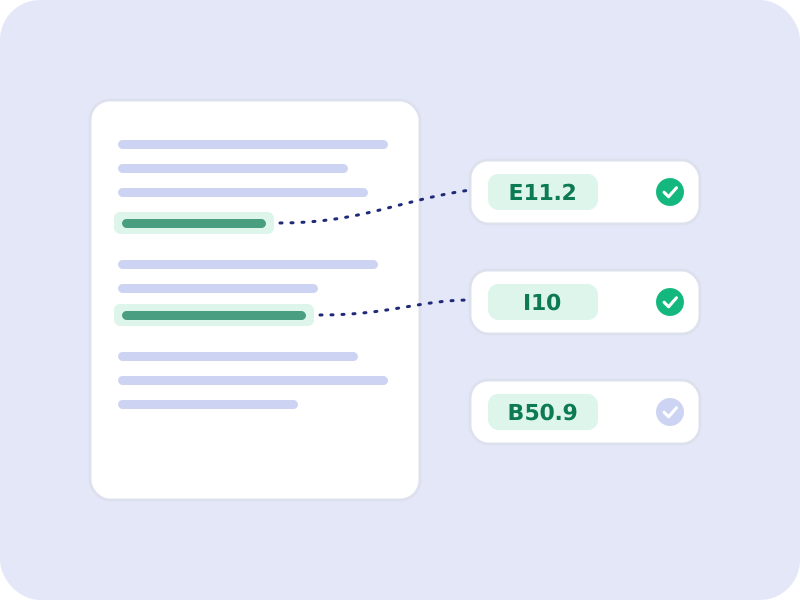
Accurate codes for records, reports and claims.
- ICD-10 and ICD-11 suggestionsCodes suggested for diagnoses documented in the note, in the classification your facility uses.
- Supporting text highlightedEach code points to the words in the note that justify it.
- Specificity promptsNotes that lack detail, such as diabetes without its complications, are flagged before coding.
- Claims-ready outputCoded encounters export for HMO and NHIA claims and for routine health reporting.
Watch
Clinical Coding in 30 seconds.
Safeguards
The clinician stays in charge.
Used by clinical coders, health records officers and billing teams.
- Codes only what is writtenSuppa AtoZ never adds a diagnosis the clinician did not document.
- A person confirms every codeClinical coders or clinicians accept, change or reject each suggestion.
- Changes are trackedEvery accepted or changed code is logged with who changed it and when.
Other first-release tools