

ProductPrescription Safety
Medication
A second check on every prescription, at the moment it is written.
Prescription Safety checks each new prescription against the patient's record for interactions, allergies, duplicate therapy and contraindications, and explains every alert.
| Check | Finding |
|---|---|
| Allergy | Recorded sulfonamide allergy. Sulfadoxine-pyrimethamine contains a sulfonamide. |
| Duplicate | Diclofenac and ibuprofen prescribed together: two NSAIDs. |
| Pregnancy | Lisinopril prescribed in pregnancy. ACE inhibitors are contraindicated in pregnancy. |
What it does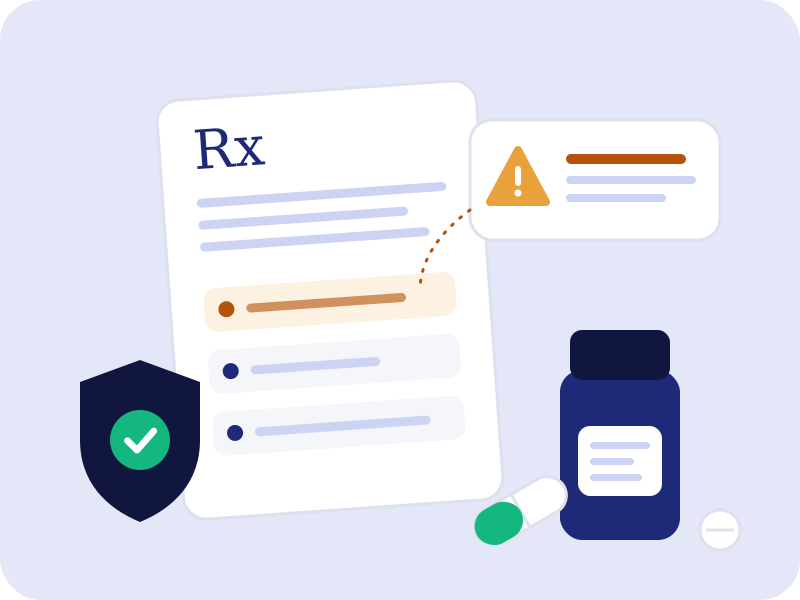
Four checks on every prescription.
- Drug interactionsClinically significant interactions between new and current medicines, graded by severity.
- Allergies and cross-sensitivityRecorded allergies checked against the medicine and related drug classes.
- Duplicate therapyTwo medicines from the same class, such as two NSAIDs or two ACE inhibitors.
- ContraindicationsConditions such as pregnancy or kidney disease that make a medicine unsafe for this patient.
Watch
Prescription Safety in 30 seconds.
Safeguards
The clinician stays in charge.
Used by prescribers in clinics and wards, and by pharmacists reviewing prescriptions.
- Alerts explain themselvesEach alert gives the reason and the source, so the prescriber can decide quickly.
- Fewer, more useful alertsSerious findings come first. Minor interactions are grouped so they do not crowd out what matters.
- Overrides are recordedA prescriber can override any alert with a reason. The decision is logged for pharmacy and audit.
Other first-release tools